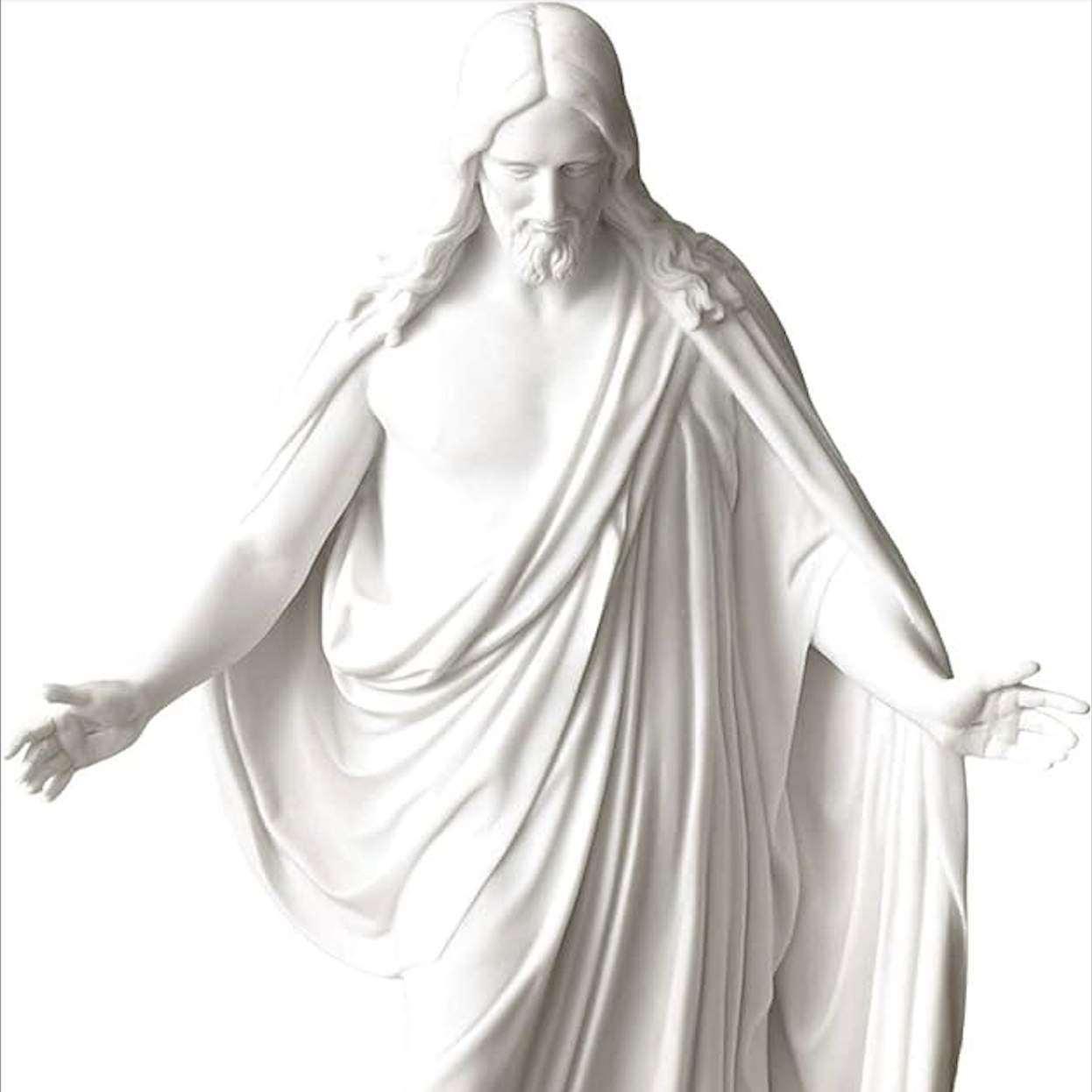
The Atonement of Jesus Christ is the most foundational doctrine in all Christianity, however, it is the single doctrine that is the most misunderstood.
If one cannot understand or comprehend the basics of the Atonement of Jesus Christ, it is impossible for one to actually apply it, or to make it effectual in his or her life.
There have been many theories of the Atonement over the past 2,000 years. A few notable theories include the Ransom Theory, the Satisfaction Theory, the Christus Victor Theory, the Penal Substitution Theory, and the Governmental Theory.
All of these theories contain elements of truth, however, they fall short in that they neglect the foundational attributes of (1) mercy and (2) grace – and the godly emotion, or the driving force, known as (3) divine compassion.
In short, what these traditional theories of the Atonement miss is that they are built upon the premise that at His core, our Father in Heaven is punitive in nature.
The truth is the exact opposite.
Our Father in Heaven is redemptive, not punitive, in nature. Everything He does is to redeem us, to endow us, and to heal us. We are His jewels. His greatest desire is to make us whole – but only to the degree that we let Him. He desperately yearns for us to come back into His presence.
Equally important, these theories do not address the following critical points when a sinner experiences the Atonement:
(1) does a sinner actually experience a change of heart (do they willingly become more like Jesus Christ and our Father in Heaven)
(2) is the injured party made whole
(3) is the sinner made whole
(4) are all ancillary parties made whole
(5) is the sinner and the injured party reconciled with each other
(6) … is Heavenly Father made whole when our sins hurt and injured others? This is an extremely deep question that we will delve into throughout this work, but consider this: we are all His jewels, and when we act in a way that causes others to reject Him, we are robbing Him of something that is most precious to Him. If our sins / actions cause other to reject Him, how is He made whole if the person who rejected Him never returns?
We will expand on the importance of these questions in more detail as we proceed on this journey, and we will detail how only the “Grace Theory” of the Atonement of Jesus Christ is the only theory that comprehensively addresses these questions in full.
_____________________________________________
Deeper still, one must also wonder about other instances in life where one feels “robbed?”
(1) Maybe a person was born with a physical defect.
(2) Maybe one experienced a trauma due to a natural disaster.
(3) Maybe an individual experienced great loss due to a financial setback beyond their control.
Is the Atonement of Jesus Christ comprehensive enough to address these circumstances as well (where one feels “robbed” … but NOT on account of the action of a sinner), and to make the injured party whole?
In sum, the “Grace Theory” of the Atonement of Jesus Christ is comprehensive in its depth and breadth. It fully addresses the sinner as well as the injured (or “robbed,” whether ourselves or even Heavenly Father) … no matter the cause. Finally, it is the only theory of the Atonement that truly addresses the idea of a person being brought back into the presence of God – face to face – “at one,” or being able to stand in the presence of God in peace. When one is fully committed and playing on God’s team to bring about His purposes, a person is not only fully aligned with our Heavenly Father, but one is “at one” with one’s standing before our Father who loves us, and one is confident in his or her role. It is only through the Atonement of Jesus Christ that we can experience true confidence and feel eternally treasured.
_____________________________________________
Our Heavenly Father often employs opposites as effective teaching devices. A person must first comprehend the darkness to fully comprehend the light, or a person must experience the bitter to fully appreciate the sweet.
In order to provide additional perspective to more fully illustrate what the “Grace Theory” of the Atonement of Jesus Christ truly is, we must first explore what it isn’t.
Said differently, before we can comprehend the mechanics and the mystery of the “Grace Theory” of the Atonement of Jesus Christ – or before we can gain an understanding of how the Atonement actually works and how we can actually apply it on a personal level on a continual bases – we must first understand where other theories of the Atonement fall short.
We will quickly provide a high level recap of the following five major Atonement theories that have experience broad appeal and adoption over the past 2,000 years to provide depth and breadth to how others have viewed the Atonement, and to better understand why the “Grace Theory” of the Atonement of Jesus Christ is the only theory that is fully in harmony with the scriptures and the true nature of our Father in Heaven:
(1) Ransom Theory
(2) Satisfaction Theory
(3) Christus Victor Theory
(4) Penal Substitution Theory
(5) Governmental Theory
NEXT PAGE ->
NOTES:
(1) Quite often when a person faces a challenge, a trial, an adversity, a heartache, etc … he or she is simply instructed to “use the Atonement” in order to get through it. OK, so how exactly does one “use the Atonement?” If this question is asked, one might as well as be looking at a deer in the headlights. Surely, it is easier to say “use the Atonement” than to actually explain how to do so in an easy to apply and understandable manner.
(2) If one can understand how the Atonement actually works and how to apply it in the small and simple details, it then becomes a tool that one can wield with precision so that one can employ it to bring about great changes in one’s life. At times the Atonement can seem elusive or abstract. The key is to make it simple and understandable and applicable.
(3) Part of the reasons why the Atonement has seemed to be so abstract and elusive for so long is that there are really four parts to it – the Mechanics, the Motivation, the Mystery, and the Magic. Although we will discuss all four of these elemental basics in much greater detail throughout this work, consider the following. The “mechanics” is simply how the Atonement works. The “motivation” is simply why Jesus Christ is bound to us and us to him (the driving force of “divine compassion” that connects us with Him, and why He is so driven to heal us, to help us, and to lift us up). The “mystery” is how the Atonement works in our life individually. And the “magic” is the power by which the Atonement heals and elevates us. And that is why it is so confusing. Heavenly Father is a God of intimate, personal, one on one relationships. We are each His precious jewel that has immense value. How He ministers to me is drastically different than how He ministers to you or to the other billion plus people on the earth today. It is critical that we separate the mechanics of the Atonement (the how) from the motivation (a function of that which transpired in the garden and on the cross) from the mystery of the Atonement (the individualized attention of a loving Heavenly Father to each of us individually), and even further, from where the magic of the Atonement (or the power that actually heals us and lifts us) originated from.
(4) Part of the reason why there are varying theories on the Atonement is derived from the confusion that has existed over the centuries as to whether we were individually created at birth or whether our spirits existed in a pre-mortal or pre-existent state, what our Father in Heaven’s core design and purposes are in creating us, and what our Father in Heaven’s ultimate design is for our eternal existence after death.
(5) When it comes to understanding true doctrine, we can always rely on this truth – “we understand all scripture in the context of all other scripture.” Said differently, we do not interpret any particular verse of scripture independently of all other scripture. Rather, all true interpretation of scripture should be in harmony with all other scripture. This is especially important when we attempt to understand the “mechanics” and the “mystery” of the Atonement.
- 02: Traditional Atonement Theories
- 03: Shortcomings of Traditional Theories
- 04: Chronicles of Narnia – Atonement Symbolism
- 05: Jadis and the “Demands of Justice”
- 06: What if the Traditional Model for Heavenly Father is Incorrect?
- 07: What if the Traditional Model for Hell is Incorrect?
- 08: What is God’s Wrath … really?
- 09: What if God Greatly Desires All of Us?
- 10: What if the Act of the Atonement is Ongoing?
- 11: What is the Root Cause of Sin?
- 12: Consequences of Sin
- 13: Doctrine of Grace
- 14: Grace for Grace vs Grace for Nothing
- 15: The Beatitudes
- 16: Grace & Truth
- 17: The Word
- 18: Driving Force of Compassion
- 19: The Garden & the Cross
- 20: Alpha & Omega
- 21: The Mechanics, the Motivation, the Mystery, & the Magic
- 22: The Keys that Unlock
- 23: Widow of Zarephath
- 24: Naaman the Leper
- 25: Feeding the 5,000
- 26: Cain & Abel
- 27: David & Abigail
- 28: David & Goliath
- 29: David & Saul
- 30: Saul who became Paul
- 31: Woman with Issue of Blood
- 32: The Widow’s Mite
- 33: Noah
- 34: Abraham & Lot
- 35: Rebekah
- 36: Joseph of Egypt
- 37: Moses
- 38: Joshua
- 39: Gideon
- 40: Ruth
- 41: Samuel
- 42: Elijah
- 43: Daniel
- 44: Job
- 45: Joseph & Mary
- 46: Law of the Fast
- 47: The Power of the Scriptures
- 48: The Power of Prayer
- 49: The Power of Sight
- 50: Faith, Works, Grace, Commandments, and the Holy Ghost
- 51: Personal Revelation
- 52: The Church
- 53: True Worship
- 54: Foundational Truths
- 55: Tempting God
- 56: Satan’s Lies & Temptations
- 57: Satan’s Methods
- 58: Expectation vs Desire
- 59: Justice & Mercy
- 60: Source of God’s Power
- 61: To Prove
- 62: Redeem & to Endow
- 63: The Debt & the Ransom
- 64: Christ is the Author
- 65: Earthly Experience
- 66: The Prodigal
- 67: How we are Healed
- 68: A Change of Heart
- 69: Forgiveness
- 70: Every Knee Shall Bow
- 71: A Testimony of Jesus
- 72: The Repentance Process
- 73: Twin Pillars of Progression
- 74: The Covenant Path
- 75: Marriage & Family
- 76: How the Pharisees Missed the Mark
- 77: The Spirit World
- 78: The Resurrection
- 79: Service & Kindness
- 80: One by One
- 81: Be Ye Perfect
- 82: Anoint Your Eyes With Clay
- 83: Fruit of the Tree of Life
- 84: That Which Ultimately Saves
- a: SUMMATION
- b: DISCLAIMER
 Christ's Atonement