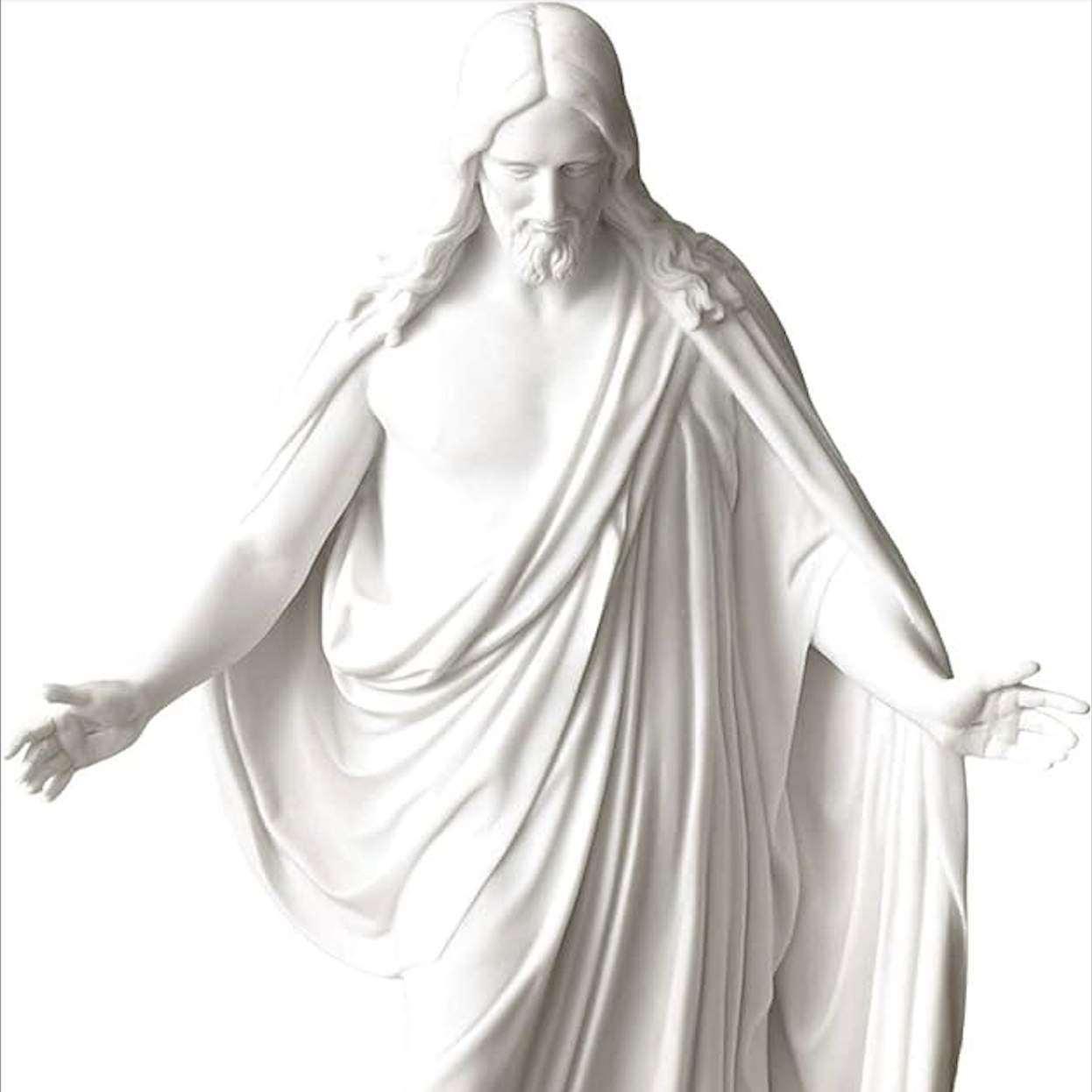
The Lord’s true church has several different roles:
(1) Teach the true doctrine of Christ
(2) Administer baptism into the Lord’s Church and to give the gift of the Holy Ghost
(3) Administer the priesthood so as to enable binding ordinances and covenants
(4) Administer the priesthood so as to enable the blessings of the sacrament
(5) Administer the priesthood so that one can benefit from having a common judge in Israel.
(6) Create an environment where one is able to practice living the gospel (giving grace and receiving grace which enables progression)
(7) Create a support structure / safe place from the storms of life.
(8) To share the gospel message with others throughout the entire world so that all might benefit from the blessings of Heaven.
(9) To establish the Kingdom of God on the earth, which is to say it protects us from false ideas and false teachings that would lead us down other paths.
It must be remembered that salvation comes only through Jesus Christ himself. Furthermore, it must be remembered that the Lord’s church is staffed with imperfect people who make mistakes (which must be incredibly frustrating for our Father in Heaven).
NOTES:
(1) A person’s stewardship is simply the area in one’s life in which he or she has been entrusted and directed to “give life” – or to lift and to serve – by our Heavenly Father. This can include such roles as father or mother, brother or sister, aunt or uncle, as well as callings to serve in the Lord’s true church.
(2) Just become a person has been entrusted with a stewardship does not necessarily mean that they are perfect, or that everything they do is sanctioned and approved by God. There is not a perfect brother or sister, parent, teacher, bishop, etc out there. To expect otherwise is to be uncharitable. It is unrealistic. Are you perfect in all of your roles that God has entrusted you with? That is a sobering question to reflect upon. All that Heavenly Father has to work with is imperfect people who routinely make mistakes. If you think this is frustrating for you when you are on the receiving end of these shortcomings, consider how frustrating it must be for our Father in Heaven when He has to staff families that He sends his precious spirits to, or His church, with imperfect parents and imperfect leaders.
(3) There is order and structure in Kingdom of God. All things are done in wisdom (which takes into account how we as God’s children are prone to respond to His tutelage).
(4) When a person “sustains” a person who has received a calling in the Lord’s Church, one is not “voting” for this person. It is not as if one can vote a person out of a position of responsibility. The Lord has already call this person. He is already aware of both their strengths and abilities to lift others and to “give life,” as well as their weaknesses and shortcomings. He has still called them to His labor. The Lord has called this person to this position of service so that through acts of grace, or through lifting and serving others, he or she might be able to learn, grow, progress, and overcome shortcomings and weaknesses. If there were no opportunities to serve in the Church, or no opportunities to render grace, there could be no growth. The doctrine is clear: individuals go from one level of progression to the next level of progression (or from one rung on the ladder to the next higher rung on the ladder) as one shows grace to others and subsequently received Heavenly grace from up above that elevates, enables, and endows them. We all progress “grace for grace,” not “grace for nothing.”
(5) Why are most members of the Lord’s Church called to positions of responsibility? Consider this. If a single Bishop or Elder’s Quorum or Relief Society president did all the work (if they rendered all the service in lifting and giving comfort and aid to ward members), then this single Bishop or Elder’s Quorum or Relief Society president would experience all of the growth and blessings that would come from Heaven. One receives grace and blessings as they give grace. This would be untenable and not desirable. All other ward members would be stuck and in a sense damned in that their progress would come to a screeching halt (without service to others, or without giving grace, the Heavens would be rendered powerless to reach down and to lift). The Lord spreads the load around so that all might have opportunity to serve and to give aid (to “give life”) … so that in turn all might be recipients of Heavenly aid and grace. As all serve, so to do all rise and grow.
(6) When we “sustain” a person who has received a calling in the Lord’s Church, we are in effect witnessing to Heavenly Father that we are willing to support or sustain them in their weaknesses and shortcomings, and to help them become the valiant and faithful leader that they have been called to become. That does not mean we are going to turn a blind eye to their weakness or shortcoming, or give license or excuse to it, or in any other way to sanction it. Rather, we are going to serve them by lifting them up where they are weak, and help them be the champ that Heavenly Father already sees in them.
(7) When the Israelites were battling the Amalekites after their deliverance from Egypt, as long as Moses’ held up his arms, the Israelites prospered. However, his arms grew tired, and when he lowered his arms to rest, the Amalekites prospered. Instead of criticizing or condemning or otherwise speaking evil of Moses, Aaron and Hur sustained Moses in his weakness in that they went to his aid and held up his weary arms so that Moses could fulfill his role and so that the Israelites could come out victorious (see Exodus 17:8-13)
 Christ's Atonement