Although the exact scope of what occurred in the Garden of Gethsemane and on the Cross is not fully understood (and is most likely beyond the comprehension of those on this mortal earth), there are some elements that we can safely assume were involved.
In short, in the Garden of Gethsemane Christ considered the following with respect to each and every one of us:
(1) The work that was going to be involved in healing each of us, or in making us whole.
(2) How unworthy each of us was of His mercy and grace (due to the fact that we have all sinned, fallen short, and have been guilt of hurting others).
Christ had to consider each one of us as if we were the only person He was undergoing the Atonement for. He had to understand the gravity of the work that He was going to have to do to heal us and make us whole, and He had to willingly choose to give His precious life for us – especially considering how unworthy each of us were of His life – as if we were the only person He was sacrificing His life for.
There must have been a force playing interference and suggesting that each of us was unworthy of His life. A voice must have whispered something to the effect of “why would you give you life for one so unworthy and so pathetic as this soul … who has done this and done that?”
It must be remembered that the Atonement did not end in the Garden and on the Cross, but rather, like a book, the Garden and the Cross represented a single bookend of a book with billions of individual chapters to follow (Christ is indeed the author of our lives, and there is a chapter in this book for each of us), and that much of the Atonement of Jesus Christ is still to play out. Indeed, a core part of the Atonement is the fact that Jesus Christ will be there to heal our hearts and to make us whole. That will involve a lot of work yet to be completed. Jesus is not on some golf course playing golf for eternity. He is there holding us up, comforting us, and guiding us to better choices. He is there to give us grace. That takes work.
Christ had to understand the enormity of this work yet to be done, and this enormity of work yet to be borne must have caused Him to bleed at every pour.
Two things to note about this:
(1) We sweat when we are working, or carrying a load.
(2) Blood represents life.
When we put these two ideas together, Christ was going to bear a load in doing the work necessary to heal us and to make us whole, and it was going to require His giving His life. It was work that was going to require the giving of His life.
Indeed, Christ gave us life by giving His life, and in doing so He was giving even greater life by one mightier than Himself, our Heavenly Father.
In sum, what occurred in the Garden and on the Cross did not complete the Atonement in some metaphysical sense (in that something so mysterious occurred there to somehow magically cover all of our sins and to heal us of our heartaches) … but what occurred there bound Christ to us, and us to Him.
What occurred in the Garden and on the Cross was only the first bookend of the enormity of the Atonement … with billions of chapters yet to be completed as Christ is actively involved in the details of our life to this day. Yes … He is still there doing the work of lifting us up, of comforting our hearts, and of healing our pains. In the end, He is doing the work of elevating us to where He is and to making us whole.
_____________________________
Notes:
(1) It should be acknowledged that just as the Atonement did not end on the cross, it did not begin in the garden either. The scriptures clearly state that Christ went forth suffering pains and afflictions and temptations of every kind, so that He might be able to take upon Himself the pains and the sicknesses of His people (Alma 7:11-13). In sum, the entirely of the Atonement did not just start with his mortal birth and span his earthly life, but it most certainly encompasses His pre mortal life as well (as things that occurred there are part and parcel to what occurred in the garden and on the cross here).
(2) The scriptures clearly teach that if we do not accept Christ and His Atonement, then we too must suffer as He suffered (D&C19:16-19). In short, we will come to comprehend how our actions have affected all others – including how our actions have rippled from one person outward. We will become aware of the pain, the heartache, and the injury that we have caused others, and to compound this, we will become acutely aware that we are unable to fix it (or to make the injured parties whole). We will be in misery knowing that we have injured and robbed others, and that we are totally unable to do even the smallest things to make it right.
(3) It is said that when we die, our life flashes before us. But we do not see our lives from our point of view. We experience our lives from the perspective of how everyone we even had the slightest contact with experienced us, and how our lives crossing paths affected others for both the good and the bad, and how our actions rippled to others beyond our individual contact. If we have not repented and experienced the Atonement, all negative actions left unaddressed will be brought back to our recollections. This is another way of saying that we will be make acutely aware of that which still needs fixing (the hurt, the injury, the heartache that still needs to be healed).
(4) Part of the struggle and the weight experienced by Christ in the garden was the fact that Jesus considered each one of us individually (how this was done is beyond human understanding or explanation, but we know it must have been done), and He considered two things. First He was made fully aware of the work that was going to be required to heal us and to make us whole, and second, He was made fully aware of how unworthy each of us was – since we were guilty of injuring and robbing others around us (we were guilty of taking life away from His Father’s jewels). Christ had to consider each of us individually, and consciously choose to be willing to give His life for each of us individually … as if we were the only person He was giving His life for, because he was taking upon Himself the commitment to do the work necessary to heal us despite our utter unworthiness of His precious life.
(5) Christ could not have become the Christ by simply living a perfect life. It was the act of grace in giving us life by giving His life that enabled Him to be elevated to a higher plain by one mightier than Himself – even our Heavenly Father (Galatians 1:1). Jesus became the Christ through an act of grace. He was elevated to becoming the Christ by an act of grace – through the power of our Heavenly Father.
(6) The Heaven’s weep for any one of three reasons. First, maybe there is compassion for the pain one feels when they are being beaten by another. Second, maybe there is a sense of loss when someone who one loves chooses to make a bad decision and chooses to separate one’s self from the group. And third, when one acts out of compassion to serve and lift another, one can’t but help weep at the act of love shown in blessing another. One can confidently assert that the Heaven’s wept over Christ’s love and compassion for all of us individually in His giving His life for us. It most likely was not tears due to the pain he experienced, but due to the love and the service He was giving so that we too could come back into the presence of our Heavenly Father.
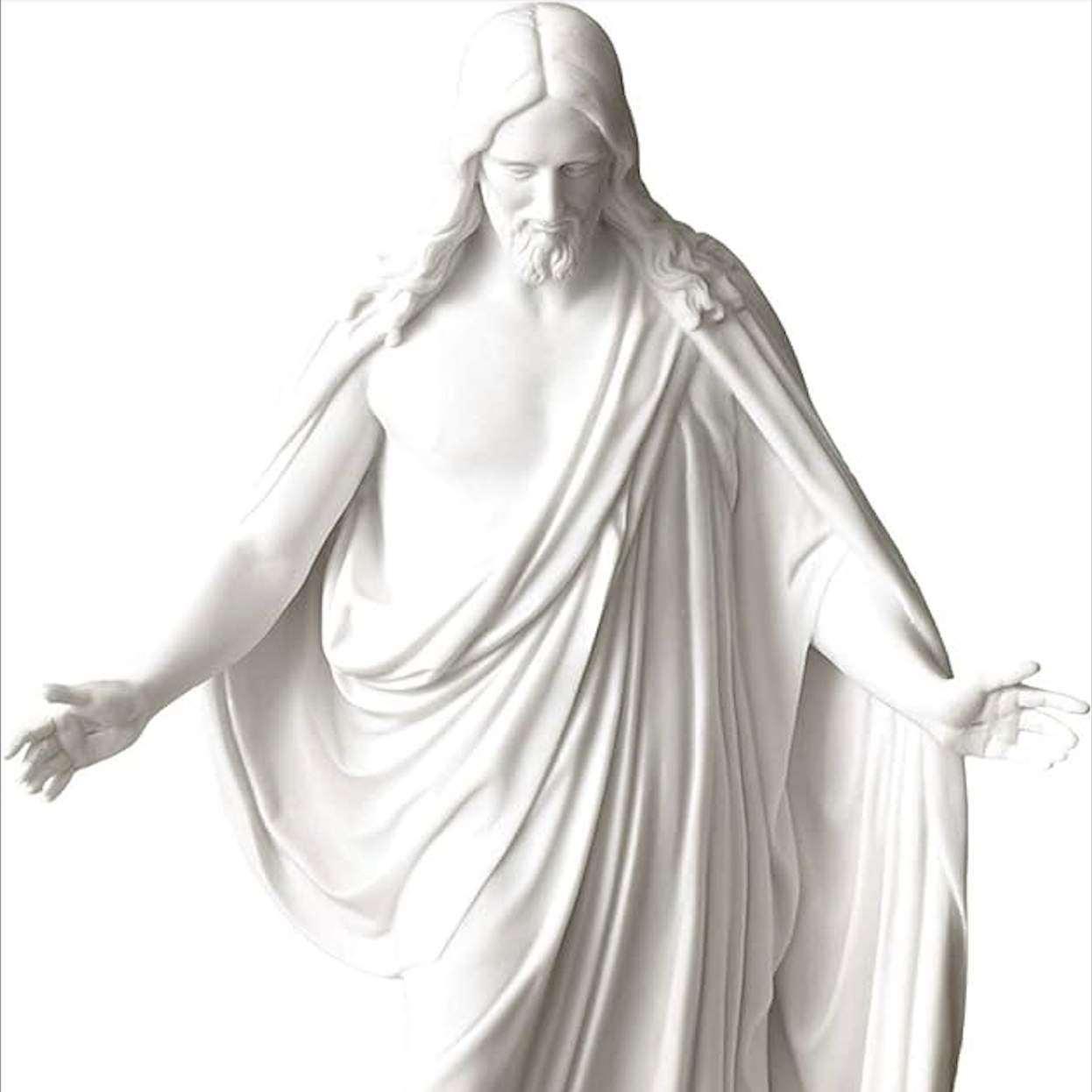
 Christ's Atonement